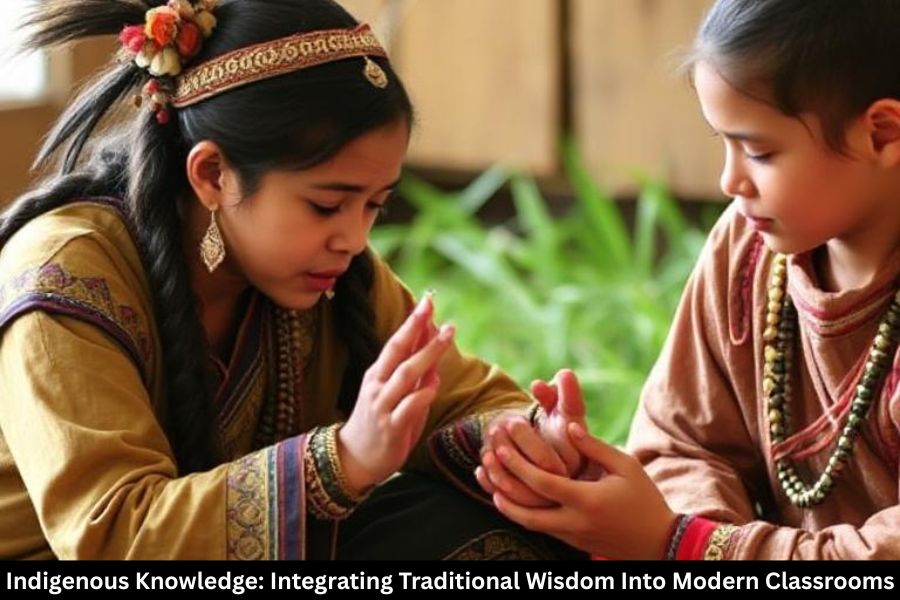
Education is more than textbooks and exams. It’s stories. It’s relationships. It’s identity. And for thousands of years, Indigenous communities around the world have been educating their children in ways that are deeply connected to land, culture, and community.
So here’s the big question: What happens when we bring that wisdom into modern classrooms?
Let’s explore.
Understanding Indigenous Knowledge
What Is Indigenous Knowledge?
Indigenous knowledge refers to the understandings, skills, and philosophies developed by Indigenous communities through generations of living in close connection with their environment.
It’s not just information. It’s lived experience.
It includes ecological knowledge, spiritual practices, governance systems, medicine, art, language, and social structures. It’s holistic—meaning everything is connected.
Core Characteristics of Traditional Wisdom
Indigenous knowledge isn’t fragmented into separate subjects like math or science. It flows as one system.
Oral Traditions and Storytelling
Stories carry history, ethics, survival strategies, and cultural values. A single story can teach science, morality, and community responsibility all at once.
Storytelling isn’t entertainment. It’s curriculum.
Community-Centered Learning
Learning happens collectively. Elders, parents, and community members all contribute. Education is not isolated within four classroom walls.
The Historical Context of Indigenous Education
Pre-Colonial Learning Systems
Before colonization, Indigenous societies had well-developed systems of education. Children learned by observing, participating, and practicing real-world skills.
Hunting taught biology. Farming taught ecology. Crafting taught engineering principles.
Education was practical and purposeful.
Impact of Colonization on Indigenous Knowledge
Colonization disrupted these systems. Western education models often dismissed Indigenous knowledge as inferior.
Language Suppression
Indigenous languages were banned in many regions. But language is more than communication—it carries worldview.
Lose the language, and you risk losing the worldview.
Cultural Displacement in Schools
In many countries, Indigenous children were separated from families and placed in institutions designed to erase cultural identity.
The scars remain today.
Why Indigenous Knowledge Matters Today
Preserving Cultural Identity
Integrating Indigenous perspectives supports cultural survival. It validates students’ heritage rather than sidelining it.
Representation matters. Deeply.
Promoting Diversity and Inclusion
When classrooms include Indigenous knowledge, education becomes more inclusive. Students learn that there are multiple ways of understanding the world.
There isn’t just one lens.
Strengthening Environmental Awareness
Indigenous communities have stewarded ecosystems for generations. Their knowledge of land management, biodiversity, and sustainability is invaluable—especially in a climate crisis.
Modern science is beginning to catch up to what traditional wisdom has long practiced.
Bridging the Gap Between Traditional and Modern Education
Recognizing Knowledge Systems as Equal
Integration isn’t about adding a token lesson on Indigenous culture. It’s about recognizing Indigenous knowledge as equally valid.
Different does not mean lesser.
Decolonizing the Curriculum
Decolonizing education means questioning whose voices dominate textbooks. It means expanding narratives to include Indigenous perspectives across subjects.
History, science, literature—everywhere.
Benefits of Integrating Indigenous Knowledge in Classrooms
Enhancing Critical Thinking
Exposure to multiple knowledge systems encourages students to question assumptions and compare perspectives.
It sharpens analysis.
Building Empathy and Respect
Understanding Indigenous histories and experiences fosters compassion.
Education becomes a bridge instead of a barrier.
Supporting Holistic Development
Indigenous education emphasizes emotional, spiritual, physical, and intellectual growth.
Not just grades. Growth.
Indigenous Pedagogies and Teaching Methods
Storytelling as a Teaching Tool
Stories make lessons memorable. They activate imagination and emotional connection.
Instead of memorizing facts, students internalize meaning.
Land-Based Learning
Learning directly from nature strengthens environmental literacy and cultural understanding.
Outdoor Education Models
Field trips become immersive experiences. Students learn about plants, ecosystems, and local history firsthand.
Experiential Learning Approaches
Hands-on activities—like traditional crafts or community projects—turn theory into lived experience.
Learning sticks when you do, not just listen.
Role of Language in Indigenous Education
Revitalizing Indigenous Languages
Language revitalization programs strengthen identity and cognitive development.
Bilingual students often show enhanced problem-solving skills.
Multilingual Classrooms
Including Indigenous languages alongside dominant ones creates richer learning environments.
Language diversity equals intellectual diversity.
Collaborative Partnerships With Indigenous Communities
Involving Elders and Knowledge Keepers
Elders hold invaluable knowledge. Inviting them into classrooms builds authenticity and respect.
Learning becomes relational.
Ethical Engagement Practices
Collaboration must be respectful and consent-based. Schools must avoid appropriating knowledge without permission.
Partnership—not extraction—is key.
Curriculum Design Strategies
Cross-Curricular Integration
Indigenous perspectives can be woven into:
- Science (traditional ecological knowledge)
- Literature (oral storytelling traditions)
- Geography (land stewardship practices)
- Art (symbolism and cultural expression)
Integration works best when it’s organic, not forced.
Project-Based Learning Approaches
Students can research local Indigenous history, collaborate on environmental initiatives, or document community stories.
Projects create deeper engagement.
Challenges in Implementation
Institutional Resistance
Some systems resist change. Standardized testing pressures leave little room for alternative approaches.
Transformation takes courage.
Lack of Teacher Training
Many educators feel unprepared. Without proper training, integration may feel overwhelming.
Support structures matter.
Teacher Preparation and Professional Development
Cultural Competency Training
Teachers need education about Indigenous histories, cultures, and protocols.
Awareness reduces harm.
Reflective Teaching Practices
Educators must examine personal biases. Reflection fosters growth.
Teaching is learning, too.
Technology and Indigenous Knowledge
Digital Storytelling
Technology allows communities to record and share stories globally while preserving cultural context.
Ancient wisdom meets modern tools.
Preserving Oral Histories Through Media
Audio archives, documentaries, and interactive platforms protect knowledge for future generations.
Digital platforms can amplify voices—if used respectfully.
Global Examples of Successful Integration
Case Studies From Different Countries
Countries like New Zealand incorporate Māori perspectives into national curricula. Canada integrates Indigenous knowledge in environmental education.
These examples show it’s possible.
Lessons Learned
Successful integration requires:
- Policy support
- Community collaboration
- Ongoing teacher development
It’s a journey, not a checklist.
The Future of Education Through Indigenous Perspectives
Sustainable Development and Traditional Wisdom
Indigenous knowledge offers models for sustainable living—balancing human needs with environmental protection.
Modern society urgently needs this balance.
Education for Reconciliation
Integrating Indigenous perspectives supports healing and reconciliation.
Education can repair what history fractured.
Conclusion
Indigenous knowledge is not a relic of the past. It’s a living, evolving system of wisdom rooted in community, land, and resilience.
When modern classrooms open space for traditional knowledge, education becomes richer, more inclusive, and more relevant. Students learn not just facts—but responsibility, empathy, and connection.
The goal isn’t to replace modern education. It’s to expand it.
Because when multiple knowledge systems sit at the same table, everyone learns more.
FAQs
1. What is Indigenous knowledge in simple terms?
It is the traditional wisdom, practices, and understanding developed by Indigenous communities over generations.
2. Why should modern schools include Indigenous perspectives?
It promotes inclusion, cultural respect, environmental awareness, and holistic learning.
3. How can teachers respectfully integrate Indigenous knowledge?
By collaborating with Indigenous communities, involving Elders, and receiving proper cultural training.
4. Is Indigenous knowledge compatible with modern science?
Yes. In many cases, traditional ecological knowledge complements scientific research.
5. What are the biggest challenges to integration?
Lack of training, institutional resistance, and limited policy support are common obstacles.