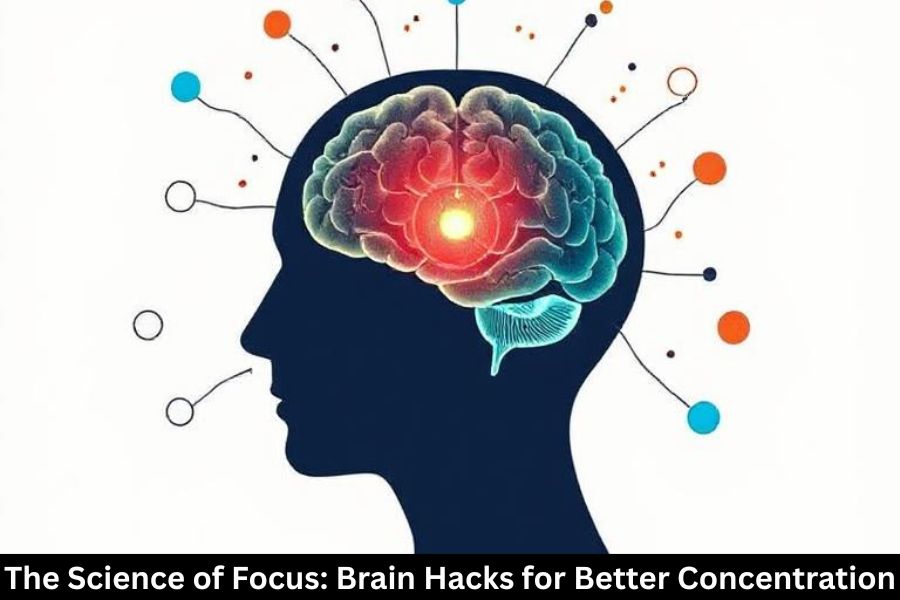
Let’s be honest. Staying focused today feels like trying to read a book in the middle of a rock concert. Notifications buzz. Emails pile up. Your brain jumps from one thought to another like a restless monkey.
But here’s the good news: focus isn’t just willpower. It’s science. And once you understand how your brain works, you can train it to concentrate better—almost like upgrading your mental software.
Let’s break it down.
What Is Focus and Why It Matters
The Definition of Concentration
Focus is your brain’s ability to direct attention toward one task while ignoring distractions. Simple, right? Not quite.
Your brain is wired to notice movement, novelty, and potential threats. That’s great for survival. Not so great when you’re trying to finish a report.
How Focus Impacts Productivity and Success
Deep concentration allows you to:
- Solve complex problems
- Learn faster
- Produce higher-quality work
- Finish tasks quicker
Think of focus as a flashlight. The narrower and brighter the beam, the clearer you see.
How the Brain Handles Attention
The Role of the Prefrontal Cortex
Your prefrontal cortex is the CEO of your brain. It handles decision-making, planning, and attention control.
When you focus, this area lights up. When you’re distracted? It gets overridden by impulses and external stimuli.
Dopamine and Motivation
Dopamine isn’t just the “feel-good” chemical. It’s the “pay attention, this matters” chemical.
How Dopamine Drives Goal-Oriented Behavior
When you set a goal and make progress, dopamine rises. That boost reinforces the behavior.
Small wins = more motivation.
The Reward System Explained
Your brain constantly asks, “Is this worth my energy?” If the reward feels distant, your attention drifts.
That’s why breaking big tasks into smaller milestones works so well.
Why We Struggle to Concentrate
Digital Distractions
Every notification is a tiny dopamine hit. Your brain loves novelty. Social media, emails, texts—they hijack your attention.
Multitasking Myths
Multitasking sounds productive. It’s not.
What you’re actually doing is task switching. And every switch drains mental energy.
Stress and Mental Fatigue
Stress floods your brain with cortisol. In small doses, it sharpens you. In excess, it clouds your thinking.
Ever tried focusing when overwhelmed? Exactly.
The Psychology Behind Deep Work
Flow State Explained
Flow is that magical state where time disappears and work feels effortless.
It happens when:
- The task is challenging
- You have clear goals
- Distractions are removed
Flow isn’t luck. It’s engineered.
Single-Tasking vs. Task Switching
Single-tasking strengthens neural pathways. Task switching weakens them.
Imagine lifting weights versus running between machines every 30 seconds. Which builds muscle?
Brain Hacks to Improve Focus Naturally
The 90-Minute Focus Rule
Your brain works in cycles called ultradian rhythms—about 90 minutes of peak focus.
Work intensely. Then rest.
The Power of Time Blocking
Schedule tasks into dedicated time slots. When it’s time to work, you work. No decisions needed.
Decision fatigue disappears.
Using the Pomodoro Technique
Work 25 minutes. Rest 5. Repeat.
How to Structure Pomodoro Sessions
After four cycles, take a longer 15–30 minute break.
Common Mistakes to Avoid
Don’t check your phone during the 5-minute break. That defeats the purpose.
The Role of Sleep in Cognitive Performance
Memory Consolidation
Sleep is when your brain files information away. Without it, memories stay messy.
Sleep Deprivation and Brain Fog
Even losing one hour of sleep reduces attention span.
Think of sleep as nightly brain maintenance.
Nutrition for Better Concentration
Brain-Boosting Foods
- Fatty fish (omega-3s)
- Blueberries (antioxidants)
- Nuts and seeds
- Leafy greens
Your brain consumes massive energy. Feed it well.
Hydration and Mental Clarity
Even mild dehydration reduces cognitive performance.
Water isn’t boring. It’s brain fuel.
Exercise and Its Impact on Brain Function
How Movement Improves Neuroplasticity
Exercise increases blood flow and stimulates brain-derived neurotrophic factor (BDNF), which supports learning.
Movement literally helps your brain grow.
Quick Workouts for Instant Focus
Try:
- 10-minute brisk walk
- 20 squats
- Jumping jacks
It’s like hitting a mental reset button.
Optimizing Your Environment for Deep Focus
Decluttering Your Workspace
Clutter competes for attention. Clean space, clear mind.
Managing Noise and Lighting
Natural light improves alertness. Background instrumental music can enhance focus.
Design your environment like a productivity lab.
Digital Minimalism and Focus
Managing Notifications
Turn off non-essential notifications. Your phone shouldn’t control your brain.
Limiting Social Media
Schedule social media time. Don’t let it bleed into work hours.
You control the tool—not the other way around.
Mindfulness and Meditation Techniques
Breathwork for Instant Calm
Try box breathing:
- Inhale 4 seconds
- Hold 4
- Exhale 4
- Hold 4
It lowers stress instantly.
Training Attention Like a Muscle
Meditation strengthens attention control. Start with 5 minutes daily.
Small reps build strong focus.
Building Long-Term Focus Habits
Creating Daily Rituals
Start work at the same time daily. Same location. Same setup.
Ritual reduces resistance.
Tracking and Measuring Progress
Track distraction-free hours. What gets measured improves.
Common Mistakes That Kill Focus
Overloading Your Schedule
Too many tasks overwhelm your brain. Prioritize three key tasks daily.
Ignoring Breaks
Breaks aren’t lazy. They’re strategic.
Even elite athletes rest between sets.
Conclusion
Focus isn’t about grinding harder. It’s about working smarter with your brain’s natural systems.
When you understand dopamine, sleep, nutrition, environment, and habits, concentration stops being a mystery. It becomes a skill.
And like any skill, it improves with practice.
Train your brain daily. Protect your attention fiercely. And watch your productivity transform.
FAQs
1. How long does it take to improve focus?
You can see small improvements within days, but lasting change typically takes a few weeks of consistent practice.
2. Does caffeine help with concentration?
In moderate amounts, yes. But too much can increase anxiety and reduce focus.
3. Can meditation really rewire the brain?
Yes. Research shows regular meditation strengthens areas linked to attention control.
4. Is multitasking ever effective?
Only for simple, automatic tasks. For complex work, it reduces performance.
5. What is the fastest way to regain focus after distraction?
Take a short movement break, breathe deeply for one minute, and restart with a clear micro-goal.