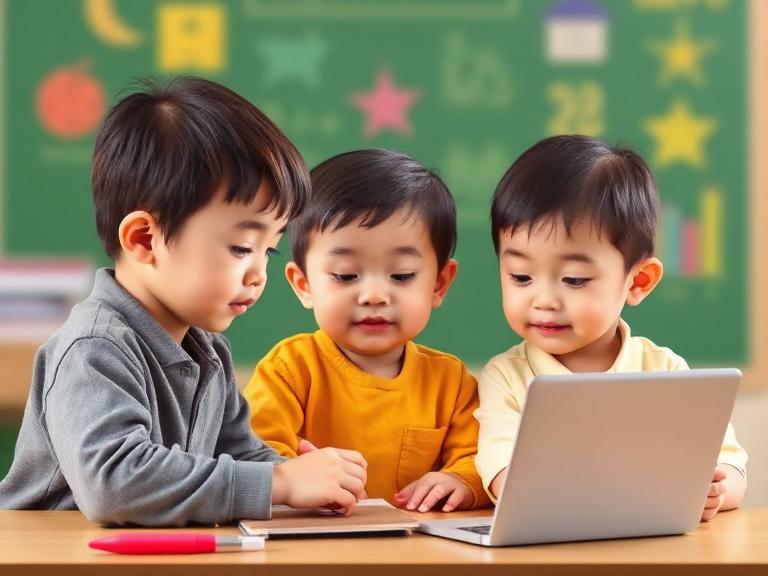
Artificial intelligence is no longer something children will encounter only when they grow up. It is already part of their everyday world. From personalized learning apps and voice assistants to AI-powered search tools, educational platforms, and chatbots, children are growing up alongside technology that can think, respond, recommend, and create.
This has naturally raised an important question for parents and educators: What impact does AI have on children’s development?
The answer is not simply positive or negative. AI for kids can open new doors for learning, creativity, problem-solving, and digital skills. At the same time, too much dependence on technology can create concerns around critical thinking, privacy, social interaction, and emotional well-being.
UNICEF notes that the long-term developmental effects of AI on children are still not fully understood, making thoughtful and child-centered use especially important.
What Does AI Mean for Kids?
AI refers to computer systems that can perform tasks that usually require human intelligence, such as understanding language, recognizing patterns, answering questions, generating content, or making recommendations.
For children, AI might appear as a learning assistant that explains a math problem, an app that adjusts lessons to their level, or a chatbot that helps them brainstorm ideas.
The growing interest in AI for kids is not really about teaching every child how to become an AI engineer. It is about helping children understand how AI works, how to use it responsibly, and when they should rely on their own judgment instead.
Positive Impact of AI on Children’s Development
When used appropriately, AI can become a useful learning companion rather than simply another screen-based distraction.
1. AI Can Support Personalized Learning
Every child learns differently. Some children understand a concept after one explanation, while others need several examples before it clicks.
AI-powered educational tools can provide explanations at different levels and offer additional examples when a child is struggling. This can make learning feel less intimidating and more personalized.
Research discussed by Harvard Graduate School of Education suggests that children can learn effectively through AI interactions when those systems are designed around sound learning principles.
For example, instead of simply giving a student the answer to a math question, a well-designed AI tool can guide the child through the steps and encourage them to reach the answer independently.
2. AI Can Encourage Creativity
AI can give children new ways to express their ideas.
A child might use an AI tool to brainstorm a story, develop characters, explore a science project, or come up with ideas for a presentation. Used correctly, this can help children move from “I don’t know what to make” to “I have an idea.”
The key is to make AI a creative partner, not a replacement for creativity.
Children should still write, draw, experiment, imagine, and make decisions themselves. AI should help expand those abilities rather than take them away.
3. AI Can Improve Problem-Solving Skills
One of the most valuable benefits of AI for kids can be learning how to ask better questions.
When children interact with AI, they quickly discover that the quality of the question can affect the quality of the answer. This can encourage them to think about what information they need, explain their problem clearly, and evaluate different possibilities.
These skills can become valuable far beyond school.
4. AI Can Help Children Build Future-Ready Skills
AI literacy is becoming an increasingly important part of digital literacy. Children need to understand not only how to use AI tools but also their limitations.
Today’s students will enter a world where AI is likely to influence many careers and industries. Teaching them responsible AI use early can help them become more confident and informed technology users.
UNICEF specifically highlights the importance of preparing and skilling children for present and future developments in AI.
5. AI Can Support Accessibility
Technology can sometimes make learning easier for children with different learning needs.
AI-powered tools may help with language translation, speech recognition, personalized explanations, or alternative ways of accessing information. UNICEF identifies increased accessibility for children with disabilities as one potential opportunity associated with AI.
This is an important reminder that AI should not only make learning faster. It should also make learning more accessible.
Potential Risks of AI for Children’s Development
The benefits of AI are exciting, but parents should not overlook the possible challenges.
1. Overdependence on AI
One of the biggest concerns is that children may start using AI to do the thinking for them.
If a child asks AI to write every essay, solve every math problem, or answer every homework question, they may complete assignments faster but miss the learning process.
The goal of AI for kids should therefore be to encourage thinking, not eliminate it.
Parents can ask questions such as:
- “Why do you think this answer is correct?”
- “Can you explain it in your own words?”
- “What would you have answered before asking AI?”
- “Can we check that information together?”
These simple conversations can turn AI use into a learning experience.
2. Reduced Human Interaction
Children need real human relationships to develop communication, empathy, cooperation, and emotional understanding.
AI can answer questions and simulate conversations, but it cannot replace the value of talking with parents, teachers, siblings, and friends.
UNICEF has also raised concerns about children using AI chatbots for advice, emotional support, and relationship-like interactions.
That is why AI should complement children’s relationships—not become a substitute for them.
3. Incorrect or Misleading Information
AI can produce convincing answers that are not necessarily accurate.
Children may assume that something is true simply because an AI tool says it confidently. This makes fact-checking an essential part of AI literacy.
Parents and teachers can encourage children to compare AI answers with books, trusted websites, teachers, and other reliable sources.
Learning to ask, “How do I know this is true?” may be more important than simply knowing how to use an AI tool.
4. Privacy and Data Concerns
Children may not understand what happens to the information they enter into digital platforms.
Personal details, photographs, school information, conversations, or other sensitive information should not be casually shared with AI systems.
UNICEF’s child-centered AI guidance emphasizes children’s safety, privacy, fairness, transparency, and well-being.
Parents should therefore look at the privacy practices and age requirements of any AI tool before allowing children to use it.
How Parents Can Encourage Healthy AI Use
Parents do not need to ban AI completely to protect their children.
Instead, the goal should be guided and balanced use.
Set Clear Boundaries
Decide when and where AI can be used. For example, children might use AI for brainstorming, explanations, or educational activities but not for completing entire assignments.
Use AI Together
Especially with younger children, parents can explore AI tools alongside them. This creates opportunities to discuss accuracy, privacy, creativity, and responsible technology use.
Encourage Offline Activities
AI should never replace outdoor play, reading, hobbies, family conversations, sports, creative activities, or face-to-face friendships.
A healthy childhood needs a balance between technology and real-world experiences.
Teach Children to Question AI
Instead of telling children that AI is always right—or always wrong—teach them to evaluate its answers.
This critical mindset is one of the most important parts of responsible AI for kids education.
Introducing Children to AI Responsibly
The best approach to AI is not fear or blind enthusiasm. It is education.
Parents can introduce children to age-appropriate AI concepts through simple examples, discussions, creative projects, and supervised educational tools. Platforms focused specifically on helping children understand AI can also make the learning process more approachable.
For parents looking for resources around AI for kids, KidzoAI is one platform worth exploring as children begin developing their understanding of artificial intelligence.
The bigger goal is to help children become confident users who understand both what AI can do and where its limitations begin.
The Future of AI and Children’s Development
AI will continue to evolve, and children will grow up surrounded by technologies that may look very different from today’s tools.
That makes AI education less about memorizing how a particular chatbot works and more about developing lasting skills: curiosity, creativity, critical thinking, digital responsibility, communication, and good judgment.
UNICEF’s current guidance emphasizes that AI systems should support children’s development and best interests while protecting their safety, privacy, rights, and inclusion.
Ultimately, the question should not be whether children should use AI at all. The more useful question is how we can help children use AI in ways that strengthen, rather than weaken, their development.
When thoughtfully introduced, AI can be a powerful tool for learning and exploration. But children still need something technology cannot replace: supportive adults, meaningful friendships, real-world experiences, and the freedom to think for themselves.
FAQs About AI for Kids
1. Is AI good for children’s development?
AI can have positive effects when it is age-appropriate, supervised, and used as a learning aid. It can support personalized learning, creativity, problem-solving, and digital literacy. However, excessive dependence on AI may create challenges, so balance is important.
2. At what age should children start learning about AI?
There is no single perfect age. Younger children can learn basic concepts through simple games and activities, while older students can explore machine learning, generative AI, ethics, and responsible AI use in greater depth.
3. Can AI replace teachers?
AI can support teachers by providing explanations, practice activities, and personalized learning assistance, but it should not replace teachers. Human educators provide mentorship, emotional support, context, encouragement, and social interaction that AI cannot fully replicate.
4. What are the biggest risks of AI for kids?
Major concerns include overdependence on AI, misinformation, privacy problems, reduced human interaction, inappropriate content, and emotional reliance on AI chatbots. UNICEF recommends child-centered approaches that prioritize safety, privacy, fairness, transparency, and well-being.
5. How can parents teach children responsible AI use?
Parents can start by using age-appropriate tools, setting clear boundaries, discussing privacy, encouraging fact-checking, and reminding children that AI is a tool rather than an authority. Most importantly, children should continue developing their own ideas and skills instead of allowing AI to do all the thinking for them.
Final Thoughts
The impact of AI on children’s development will depend greatly on how we introduce and use it.
Used thoughtfully, AI for kids can make learning more personalized, creative, accessible, and engaging. Used without boundaries, it can encourage dependency and create new challenges around privacy, critical thinking, and social development.
The answer is not to keep children away from AI forever. It is to prepare them to use it wisely.
With the right guidance from parents, teachers, and child-focused platforms, children can learn to see AI for what it really is: a powerful tool that should support their curiosity and development—not replace their ability to think, create, connect, and grow.